Picking the right High Frequency Inductorisn’t just a toss-up — it’s kind of a big deal when you want your circuit to run smoothly. I came across this insight from Dr. Emily Carter at Inductor Solutions, who said, "A good High Frequency Inductor can really boost efficiency and cut down on noise." That really hits home because inductors are such a key part of electronic design, even if they don’t always get the spotlight.
When you're hunting for the perfect High Frequency Inductor, keep in mind things like the inductance value, how much current it can handle, and its size. All these little details add up — they can make or break your circuit’s performance. If you pick something that's not quite right, you might end up with issues, or worse, a total failure. It can definitely feel overwhelming with so many options out there, right?
Plus, understanding what exactly your project needs is super important. Not every inductor fits every purpose. Chatting with engineers or folks who know their stuff can really help you see things from a different angle. Take some time to think about what you actually need, and don’t hesitate to test out a few different inductors. Sometimes, playing around with them leads to surprising, and sometimes even awesome, results. At the end of the day, just make sure that your choice lines up with your circuit goals — that’s how you get successful results.
Understanding High Frequency Inductors: Key Concepts and Terms
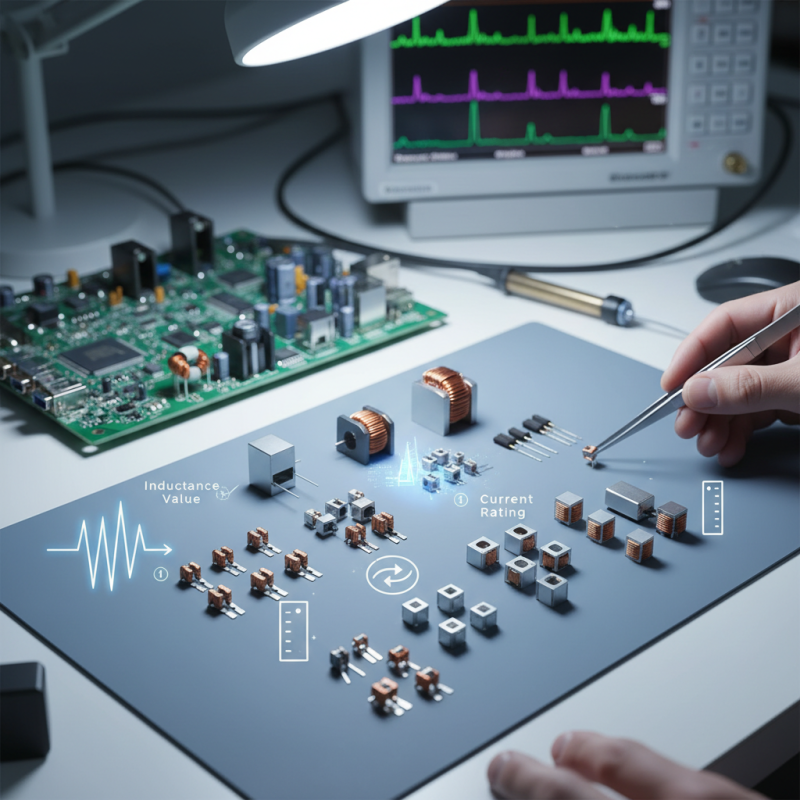
When selecting a High Frequency Inductor, understanding key terms is essential. Start with inductance value. This measures the inductor's ability to store energy. A higher value means more energy storage, but it may also lead to larger size. Pay attention to current rating. This indicates the maximum current the inductor can handle without overheating. Choosing an inductor with a higher current rating is safer.
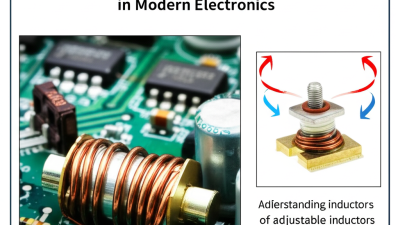
Another important aspect is the core material. Ferrite cores are common for high frequency applications. They offer low core losses, which boosts the inductor's efficiency. However, not all applications benefit from ferrite. Sometimes, Air Core Inductors might be more suitable. Consider your specific needs carefully.
**Tip:** Assess your application’s requirements thoroughly. A High Frequency Choke can help with noise reduction in circuits. Check the frequency range as well. Opt for inductors that operate well within your circuit’s frequency range. Always test different options to find the best fit. Don’t settle for the first choice. An ideal inductor should not only meet specifications but also enhance overall performance.
Identifying Your Application Requirements for Inductor Selection
When choosing a High Frequency Inductor, identifying your application requirements is crucial. Different applications demand specific inductance values, resistance, and current ratings. For example, a study by the IEEE states that medical devices often require inductors with very low core losses. A poor choice might lead to inefficiencies and increased heat generation, which is something to avoid.
High Frequency Inductors are key in power conversion and filtering. Their performance impacts efficiency and device lifespan. If your application involves RF circuits, target inductors with a high Q factor. The Q factor indicates energy loss and affects overall performance. Avoid choices that compromise on quality; it may save costs short-term but could lead to long-term issues.
Tips: Always review the datasheets. Look for details on saturation current and thermal characteristics. Sometimes, manufacturers provide insights about their products. Consider the environment where the inductor will be used. Humidity and temperature may influence its performance. If in doubt, consult industry reports or experts for guidance.
Choosing the Right High Frequency Inductor
This bar chart illustrates the current ratings of various inductors suitable for different applications. Selecting the right inductor depends on the required current ratings for optimal performance in specific applications.
Evaluating Inductor Specifications: Impedance, Current Rating, and Losses
When selecting a High Frequency Inductor, understanding specifications is crucial. Two key factors are impedance and current rating. Impedance impacts how the inductor behaves in a circuit. For instance, a typical High Frequency Inductor may exhibit an impedance ranging from a few ohms to several hundred ohms at 10 MHz. This affects signal integrity and overall performance.
Current rating is another important specification. It indicates the maximum current the inductor can handle without overheating. Some inductors may handle current ratings as high as 10A. However, higher ratings often mean larger physical sizes or more challenges in heat management. Losses also play a role. Core losses and copper losses can significantly affect efficiency. Reports indicate losses can account for 30% of total inefficiency in certain designs.
In conclusion, evaluating these specifications requires careful thought. Simply relying on maximum values can lead to issues. A thorough analysis of circuit requirements and real-world conditions is essential. Each design has unique needs, and the wrong choice can lead to subpar performance or reliability. This is where deeper understanding and critical evaluation can make a significant difference.
Material Considerations: Ferrite vs. Iron Powder Inductors
When selecting high-frequency inductors, material choice plays a crucial role. Ferrite and iron powder are two popular options with distinct characteristics. Ferrite Inductors generally have higher permeability. This results in better performance at high frequencies. They can handle more energy with less saturation. However, they may be more susceptible to temperature variations. This can affect their reliability in certain applications.
On the other hand, iron powder inductors are known for their robustness. They offer excellent thermal stability. This makes them suitable for environments with fluctuating temperatures. Their construction can handle higher currents, but they usually have a lower frequency response compared to ferrite. It’s essential to consider the specific needs of your project. Are you looking for high efficiency, or is stability your priority?
These questions can guide your choice. Each material has its strengths and weaknesses. Ferrite might be ideal for compact designs, while iron powder could be better for rugged settings. Evaluating your needs in detail can help in making an informed decision.
How to Choose the Right High Frequency Inductor for Your Needs? - Material Considerations: Ferrite vs. Iron Powder Inductors
| Inductor Type | Core Material | Inductance Range (µH) | Current Rating (A) | Frequency Response (MHz) | DCR (Ohms) |
| Ferrite Inductor | Ferrite | 1 - 100 | 0.1 - 20 | 1 - 30 | 0.005 - 0.1 |
| Iron Powder Inductor | Iron Powder | 10 - 200 | 0.5 - 15 | 0.5 - 15 | 0.01 - 0.2 |
| High-Q Ferrite Inductor | Ferrite | 1 - 50 | 0.1 - 10 | 5 - 100 | 0.005 - 0.05 |
| Low-Frequency Iron Powder Inductor | Iron Powder | 100 - 1000 | 1 - 30 | 0.1 - 5 | 0.05 - 0.5 |
Form Factor and Size: Choosing the Right Physical Dimensions
Choosing the right form factor and size for high frequency inductors is crucial. The physical dimensions impact performance in various applications. A smaller inductor can fit into compact designs. However, it may have limited inductance values. Conversely, a larger inductor offers better performance but occupies more space.
When selecting dimensions, consider your project's specific needs. For example, if space is tight, a toroidal inductor can maximize efficiency. These types allow optimized magnetic flux. But, they can be pricier. Think about your budget and how vital size is compared to performance. It's easy to overlook how size affects heat dissipation as well.
In some cases, you might find more options than expected. A range of sizes might fit your application. Yet, not all choices will meet performance expectations. Testing different sizes can reveal unexpected results. Reflect on the trade-offs between size, performance, and cost. Emphasizing one aspect may hinder others.
Assessing Cost vs. Performance: Budgeting for Your Inductor Needs
Choosing a high-frequency inductor requires careful consideration of both performance and cost. A recent industry report suggests that High Q Inductors significantly impact circuit efficiency. For instance, a high Q factor often means lower resistive losses. However, these inductors tend to be pricier. This raises the question: How much are you willing to spend?
When budgeting, consider your application. For power supplies, an investment in a high Q inductor can enhance overall system performance. Yet, the premium cost might not always justify the benefits for less demanding applications. Balancing your budget against the expected gains is crucial. A typical high Q inductor can range from $0.50 to over $3.00, depending on specifications. If your design doesn’t require high efficiency, a more economical option may suffice.
Another factor is sourcing. Availability can impact pricing as well. If a specific high Q inductor is in high demand, prices might spike. This situation can lead to making compromises on quality or performance. Reflecting on these aspects is essential. What is the trade-off you are willing to accept? Always weigh cost against performance metrics for your specific needs.
Testing and Validation: Ensuring Your Inductor Meets Expectations
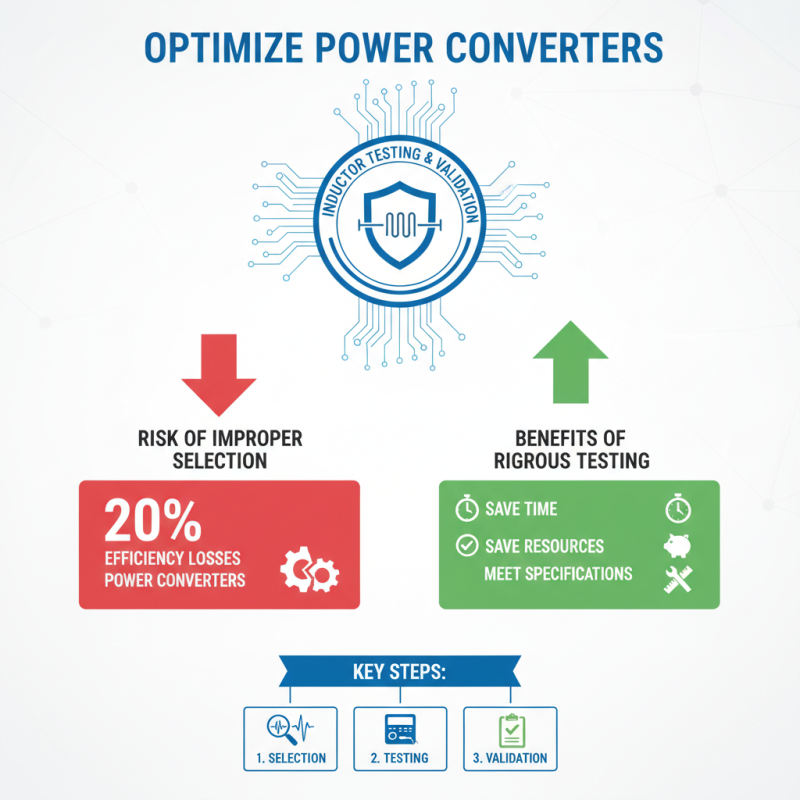
When selecting a high frequency inductor, testing and validation are critical. Ensuring that your inductor meets specifications can save time and resources. Industry data shows that improper inductor selection can lead to efficiency losses of up to 20% in power converters. This illustrates the importance of rigorous testing.
Conduct tests under various operating conditions. Evaluate parameters such as inductance, saturation current, and temperature rise. Ensure that your High Power Inductor maintains performance in real-world applications. Engaging in thorough validation can help mitigate risks and enhance product reliability.
**Tips:**
1. Use simulation tools to predict inductor behavior under load conditions.
2. Review datasheets carefully; inconsistencies can arise between lab tests and actual performance.
3. Consider end-user feedback after deployment; real-world use may reveal unforeseen issues.
Remember that the right high power inductor can significantly influence your device's performance. Balancing specifications with practical performance is essential. This approach not only optimizes efficiency but also supports a sustainable design. Keep in mind that ongoing evaluation will lead to continual improvements.
Enhancing Energy Efficiency with Molding Power Inductors: A Closer Look at the ECD32 Series
The push for enhanced energy efficiency in the electronics industry has led to significant advancements in power inductors, particularly with the ECD32 series. These inductors are designed to operate effectively in a range of demanding environments, operating within a temperature range of -55℃ to +125℃. Their low profile and low DC resistance (DCR) attributes make them ideal for applications that prioritize space and power management.
The ECD32 series excels in minimizing electromagnetic interference (EMI) thanks to its magnetically shielded construction, allowing for higher power efficiency with reduced core losses. Operating at frequencies of up to 5MHz, these inductors provide robust performance in critical applications such as voltage regulation modules (VRM) for servers and DC/DC converters for CPUs in notebooks and personal computers. The high current carrying capacity ensures stable power delivery, which is essential for modern computing and storage solutions, particularly in solid-state drive (SSD) modules.
As technology continues to evolve, embracing components like the ECD32 series will be vital in developing energy-efficient systems that not only meet the increasing demands for power but also contribute towards sustainability goals in the electronics sector.
FAQS
: A balanced diet improves overall health. It boosts energy levels and aids in weight maintenance.
Establishing a regular sleep schedule helps. Limit screen time before bed for better results.
Deep breathing exercises can reduce stress. Physical activity also plays a significant role in relieving tension.
Staying hydrated supports bodily functions. It can also impact energy and mood positively.
Exercise releases endorphins, improving mood. Even short activities can create a significant impact.
Lack of time and motivation often hinder progress. Reflecting on personal goals can reinforce commitment.
Conclusion
When selecting a High Frequency Inductor, understanding key concepts and terms is essential. Begin by identifying your specific application requirements, which will guide the selection process. Evaluating key specifications such as impedance, current rating, and losses helps in determining the inductor's suitability for your needs.
Material considerations also play a significant role; choosing between ferrite and iron powder inductors can affect performance. Additionally, the inductor's form factor and size must align with the physical constraints of your application. Balance cost and performance by budgeting appropriately, ensuring that your choice meets both financial and functional expectations. Finally, thorough testing and validation will confirm that your selected High Frequency Inductor performs as expected in real-world scenarios.

 +86-15916242887
 CONTACT US